The real cost of poor employee experience (and how to calculate it)


The cost of poor employee experience (EX) is one of the highest-risk decisions most organizations overlook. Every other proposed project gets a price and a projected return. The decision to leave poor EX alone gets neither, even though doing nothing can carry the highest price of all. For the IC, HR, and IT leaders advocating for EX spend, that missing number is a problem. In this post, Sophie Hamblett shows where the numbers start adding up, why you’re tempted to ignore them, and how to actually calculate the cost of doing nothing about poor employee experience.
Why the cost of poor employee experience stays invisible
The cost of poor employee experience stays invisible because it’s never itemized. Every other big decision gets priced, modeled, and debated by stakeholders. The choice to wait on employee experience slips through as “maintaining the status quo,” and the status quo looks free… right up until the moment you add it up.
Think about how the rest of your organization’s decisions get made. Any new hire, system migration, or restructure would be accompanied by a spreadsheet and rounds of debate about the expected return. Waiting is a decision too, but it’s one we rarely put a price on. It hides behind reasonable-sounding lines like “it’s on the roadmap, just not this quarter.”
That’s the gap this article and our Cost of doing nothing calculator and guide are here to close. Employee experience has a measurable return on investment, and the flip side – the cost of doing nothing about it – is just as measurable. Once you can put a figure on inaction, the conversation with stakeholders becomes more concrete, and it becomes far easier to justify an investment. It also becomes far harder to ignore.
What are the factors behind the true cost of poor employee experience?
The true cost of poor employee experience is the sum of three recurring drains: people leaving, people struggling to get work done, and innovation opportunity you never capture.
“The financial impact of a bad employee experience happens whether or not anyone is tracking it.”
Those three costs, which can run into the millions each year, line up neatly with how people actually experience work. Can they find the knowledge they need? Can you reach them wherever they are? Do their tools work together, or against them? When any one of these breaks down, it shows up first as friction and later financially. That financial impact is the true cost of a bad employee experience, and it happens whether or not anyone is tracking it.
The cost of employee turnover
The cost of employee turnover is the most visible aspect of the equation, and the one that’s easiest to put a number on. Gallup calculates the cost of replacing a single employee at one-half to two times their annual salary, depending on role. At any real scale, even a small dip in turnover pays off big time.
For example, take a 1,000-person company paying an average of $60,000 to the roles turning over. Shaving voluntary turnover by a single percentage point prevents roughly ten departures a year – somewhere between $300,000 and $1.2 million saved, without hiring anyone. Scale that to your headcount to get a basic idea of what it would look like for your organization.
So, what’s the connection between employee experience and turnover? Gallup’s research also found that 52% of people who quit say their employer could have done something to keep them, meaning much of this churn is a symptom of bad employee experience rather than bad luck. Gartner found that employees satisfied with their digital tools are 1.6 times more likely to stay and grow where they are (2022 Gartner Digital Worker Survey). Poor employee experience plays a major role in pushing people out, and organizations pay for it in turnover costs.
“Shaving voluntary turnover by a single percentage point prevents roughly ten departures a year – somewhere between $300,000 and $1.2 million saved, without hiring anyone. Scale that to your headcount to get a basic idea of what it would look like for your organization.”
The cost of hard-to-find information
A poor employee experience means people can’t find what they need, a problem that’s only increasing in most workplaces. Gartner found that 47% of digital workers struggle to locate the information required to do their jobs, while the average desk worker now toggles between 11 applications every day. Harvard Business Review research investigated this “toggle-tax” and found that workers are switching back and forth between apps and websites around 1,200 times a day, and wasting nearly four hours a week doing so.
“Workers are switching back and forth between apps and websites around 1,200 times a day, and wasting nearly four hours a week doing so.”
Multiply that friction across an entire workforce and the losses are enormous. People make slower decisions, duplicate work that already exists, and eventually stop looking for vital information. The fix is straightforward: a better employee experience that brings tools and content into one place and makes search work for employees. That’s the whole premise of centralized digital workplace solutions and AI-powered enterprise search – less time hunting and more time doing.
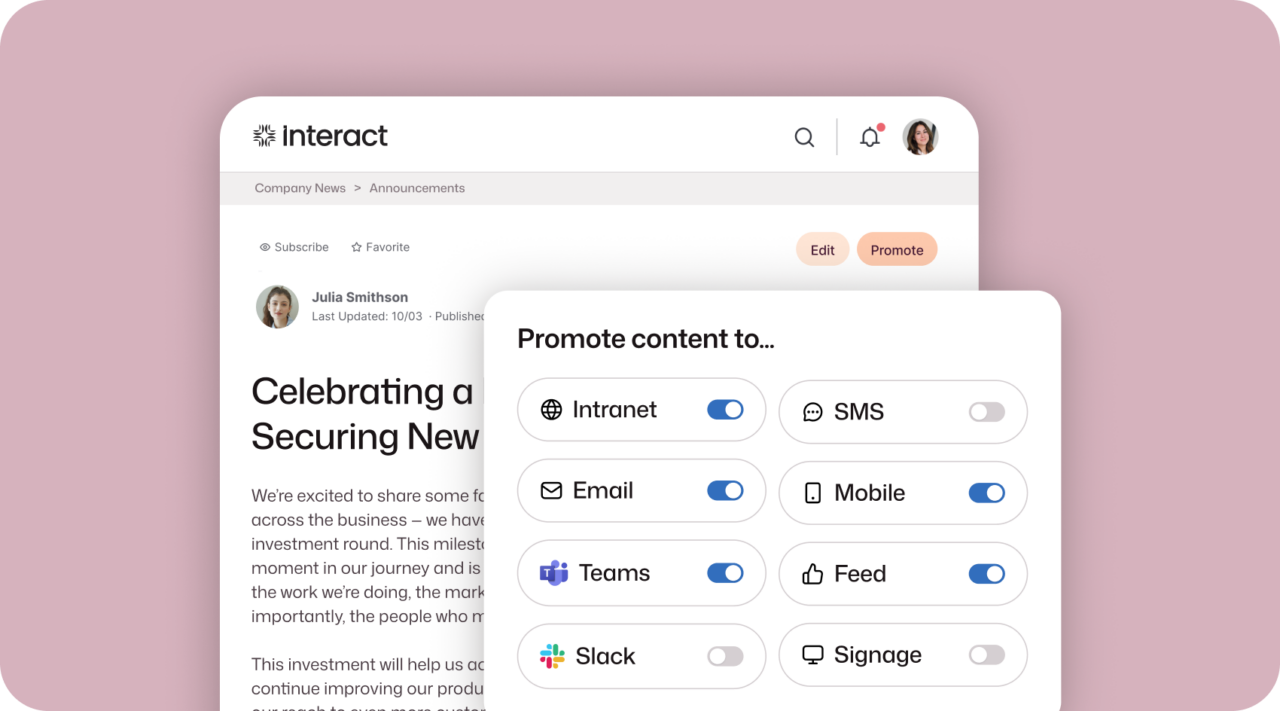
For frontline teams, the problem of too many apps is reversed. In fact, many deskless workers have no tools at all, just a noticeboard and manager comms. Far from too many places to find information, they have almost nowhere to search at all.So much extra time is spent trying to find answers that should take seconds. Take one example: a warehouse associate who needs to know which orders ship first has to track down a supervisor, wait while they dig out the answer, and walk back to the floor. It takes ten minutes, and it happens repeatedly across a shift. The answer existed somewhere, but there was no quick and easy access. The result is that, across the front line, hours are spent searching for information instead of doing the job. This is where productivity costs start to climb, and where a frontline app with centralized knowledge and multichannel publishing for internal comms can make a real difference.
The cost of a stalled workplace AI strategy
Poor employee experience often manifests in an AI gap: people doing work by hand that AI could take off their plate. They dig for answers that are buried somewhere in the intranet. They read long reports instead of getting a summary. They write the same email from scratch every single week. The Federal Reserve Bank of St. Louis estimates that generative AI is already saving the equivalent of 1.6% of all US work hours. Across a large team of knowledge workers, not implementing AI in a widespread, strategic way means a lot of wasted time, and a more frustrating, less efficient day for the employees you want to retain.
To be clear, holding off on implementing an AI strategy doesn’t keep AI out of your organization, either. People still feel the pressure to keep up, so when they aren’t presented with a sanctioned tool, they use personal accounts and free apps instead. With this rise of shadow AI, company information ends up in tools your IT team can’t see or govern. The risks are endless and potentially reputation-destroying.
Meanwhile your competitors have given their staff proper AI tools, and they’re getting more done with the same number of people.
What makes the difference is whether AI is built into the tools people already use. If assisted search, summarizing, and drafting are built into the platform they open every day, adoption happens organically. People find answers quickly instead of searching several systems for them. This ties into turnover as well – as we saw, staff with better tools are more likely to stay.
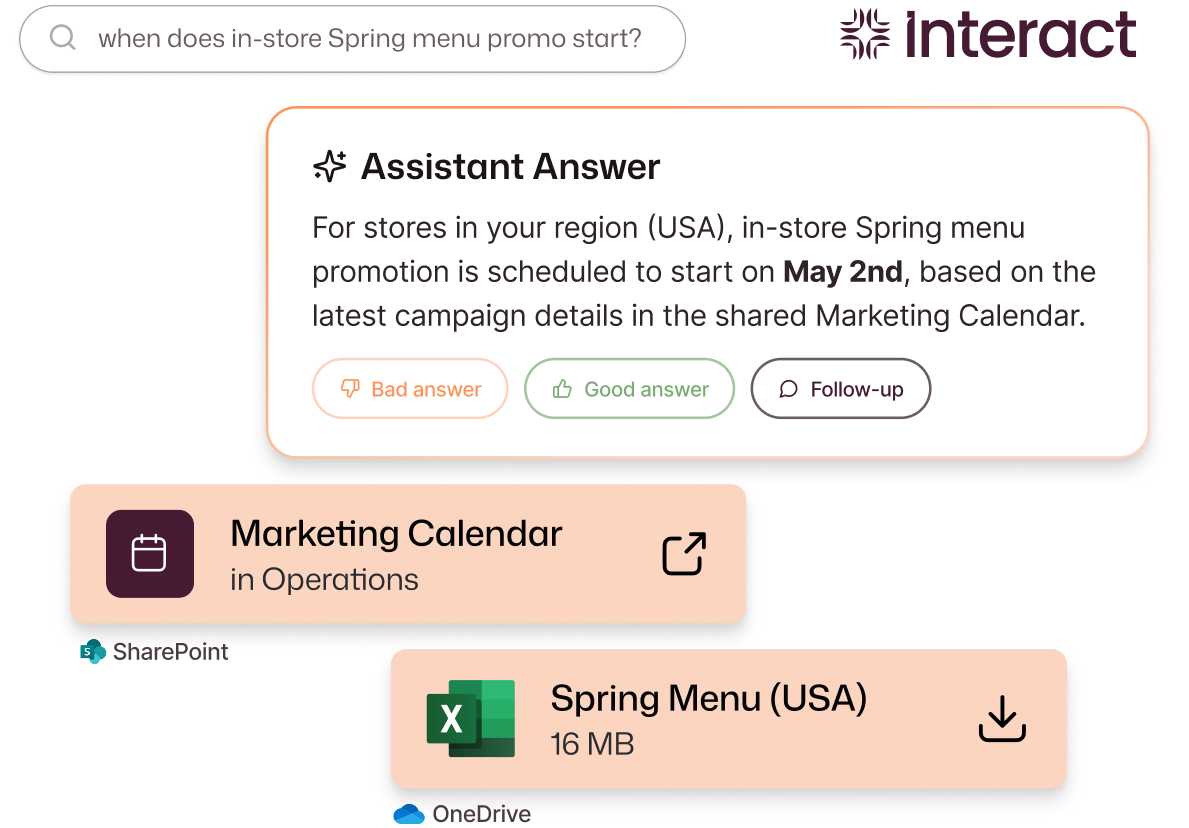
This is equally true for frontline workers, who are often left out of AI strategy. Despite making up the largest part of most organizations, they’re typically the last to get AI tools that work for them. When these tools are available, however, they benefit much more than most people think. Interact’s own data, drawn from millions of real AI searches, found that the frontline gains most from AI search: when frontline employees could finally ask a question in plain language, the way they’d ask a colleague, their activity rose by around 121%. On the other hand, without the right AI tools, frontline employees will continue to have poor, unproductive experiences.
“While you’re paying the price for a stalled workplace AI strategy, your competitors have given their staff proper AI tools, and they’re getting more done with the same number of people.”
Does doing nothing really cost more than doing something?
Yes, and it isn’t even close. The cost of acting is a defined, largely one-time investment, usually measured in the hundreds of thousands. The cost of standing still is measured in millions, and it returns every year you wait.
Here’s how the two decisions compare side by side:
| Doing nothing | Investing in employee experience | |
| Turnover | Recurs every year; one percentage point of avoidable attrition can cost millions | A better experience boosts retention, with gains compounding year over year |
| Finding information | Hours lost daily to information-hunting, slower decisions, and duplicated work | Governed content and AI search mean information surfaces in seconds |
| AI capacity | Employees spend longer on tasks AI could handle, while competitors capture the gains you don’t take advantage of | AI is embedded where people already work so more gets done and employees feel supported |
| How the cost shows up | Invisible, unbudgeted, and growing | Visible, budgeted, and finite |
| The bottom line | Millions per year, every year | Typically six figures at the start, with lower annual maintenance costs after that |
In practice, these costs aren’t isolated and each ends up driving the others up. For example, people who can’t find what they need get less done, grow more frustrated, and are likelier to leave. Once they’re gone, their replacement runs into the same problems all over again and the cycle continues. Left alone, the information gap, the turnover, and the forfeited AI gains keep feeding one another. None of it corrects on its own, and for every quarter you wait, the total cost climbs.
How can you calculate the cost of poor employee experience in your organization?
You don’t need a consultant or a spreadsheet to get a real number for your organization. We built a calculator that does the work for you. All it asks for are four data points you already have access to:
- Whether your workforce is mostly desk-based or mostly frontline. Both carry a cost, but it shows up in different proportions, so this tunes the calculation to your organization.
- Your total headcount. More people means more departures at the same turnover rate, so headcount sets the scale of the loss.
- Your average salary. Replacement costs run from roughly half to twice a salary, so higher pay means a higher price per person who leaves.
- Your voluntary turnover rate. The share of people who choose to leave each year – a higher rate means proportionally more cost every year.
Enter those figures, and it returns your annual cost of standing still. The calculator page also includes The cost of doing nothing, a short guide that runs this model in full for two example organizations (a desk-based finance firm and a frontline restaurant group) so you can see the workings behind your own number. Most people are surprised by the figure they get, and then surprised again by how small the cost of fixing it looks next to it.
Standing still on employee experience has a price tag
The only question is whether you’ve measured it. A poor experience keeps costing you whether or not it appears in a budget line. These costs show up in the people who leave, the hours lost to work that should be simpler, and the missed opportunities to stay competitive. Inaction feels like the safe, careful choice, but when you do the math, it’s often the most expensive option on the table.
Frequently asked questions
You Might Also Like
 Blog
Blog What’s shaping internal comms in 2026/27: State of the Sector survey
Have your say in Gallagher’s State of the Sector survey How effectively does communication translate into what employees actually believe, experience, and do, and…

 Blog
Blog What leaders need to see to prove the value of internal communications
Proving the value of internal communications is about showing how comms contributes to the things leadership already cares about. It requires combining communication data…
 Blog
Blog Intranet content management best practices for more reliable AI answers
When intranet AI gives the wrong answer, most teams blame the technology. But failing to adhere to intranet content management best practices is often…
 Blog
Blog Nine questions to ask intranet vendors: A checklist for your next demo
An intranet demo is designed to make the product look good. It’s easy to walk away impressed, especially now that AI is typically part…